Comfort · Treatment technology
Why Your Shower Smells Like a Pool
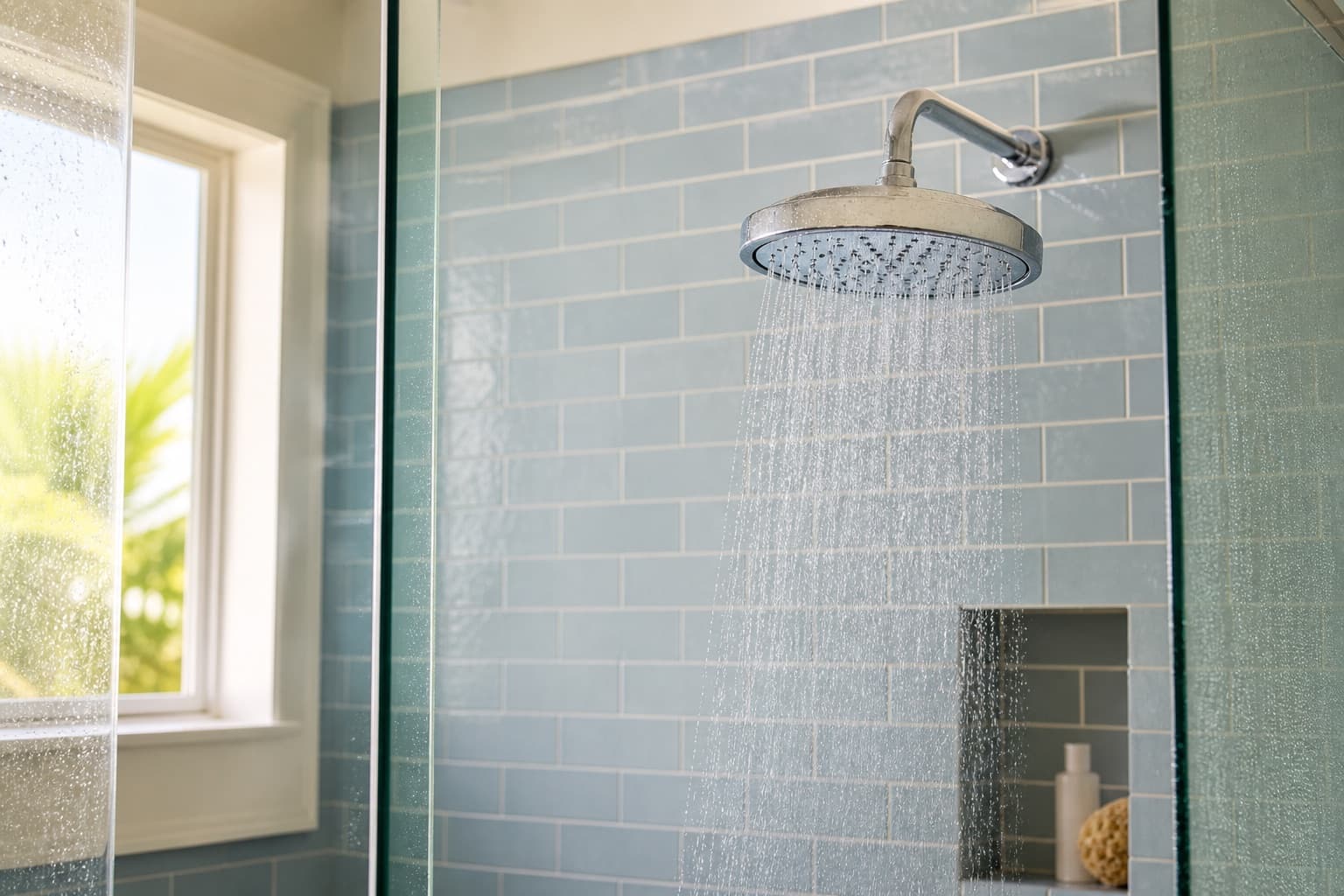
The utility treats and disinfects water before it enters the distribution system.
Published local reporting
Four provider reports. Four residuals.
These are utility-reported values, not measurements taken at an individual shower or faucet.
- Orlando Utilities Commission
- 1.2 ppm Federal MRDL 4 ppm
- Orange County Utilities · Eastern Regional
- 1.32 ppm Federal MRDL 4 ppm
- City of Apopka
- 1.9 ppm Federal MRDL 4 ppm
- Toho Water Authority · Eastern System
- 1.78 ppm Federal MRDL 4 ppm
The chlorine is there on purpose.
Water utilities disinfect drinking water and maintain a residual as it moves through the distribution system. That remaining disinfectant helps control microbial growth and gives operators a useful signal that the system is behaving as expected.
This is not a story about negligence or conspiracy. It is the difference between a utility's distribution job and the experience you want after the water reaches your home.
CDC: Water disinfection with chlorine and chloramine (opens in a new tab) EPA: Disinfectant residual management fact sheet (opens in a new tab)
The local numbers come from utility reports, not your showerhead.
Several published Greater Orlando profiles include a chlorine-residual result. Those values describe the utility's reporting—not a test performed at an individual homeowner's faucet.
Open your provider's itemized report on the homepage to see its exact published value and direct source.
OUC 2025 Water Quality Report (opens in a new tab) Orange County Utilities 2025 Annual Drinking Water Report (opens in a new tab) City of Apopka 2025 Water Quality Report (opens in a new tab) Toho Water Authority 2025 Central report (opens in a new tab)
Safe distribution and pleasant use are different jobs.
A disinfectant residual can be appropriate for the public system while its taste or odor is still noticeable in a glass or warm shower. Improving that household experience does not require claiming the municipal water is unsafe.
The treatment question is where the experience matters: one drinking tap, the whole house, or both.
CDC: Water disinfection with chlorine and chloramine (opens in a new tab)
Carbon gives chlorine a place to go.
Activated carbon can reduce chlorine-related taste and odor as water passes across a large internal surface. A whole-home carbon system is placed near the main water line when the goal includes showers and taps throughout the house.
Capacity, flow rate, media volume and maintenance all affect real performance. 'Contains carbon' is not a complete product claim.
NSF: Standards for residential water-treatment systems (opens in a new tab)
NSF/ANSI 42 is the ordinary-language checkpoint.
NSF/ANSI 42 covers aesthetic claims such as chlorine taste and odor reduction. Look for the specific certified claim and the conditions attached to it—not just a certification-shaped badge.
Different systems can be certified for different claims and capacities. The standard helps verify a stated job; it does not say every carbon system performs identically.
NSF: Standards for residential water-treatment systems (opens in a new tab)
Primary sources
Read the reporting behind the story.
- OUC 2025 Water Quality Report (opens in a new tab)
- Orange County Utilities 2025 Annual Drinking Water Report (opens in a new tab)
- City of Apopka 2025 Water Quality Report (opens in a new tab)
- Toho Water Authority 2025 Central report (opens in a new tab)
- CDC: Water disinfection with chlorine and chloramine (opens in a new tab)
- EPA: Disinfectant residual management fact sheet (opens in a new tab)
- NSF: Standards for residential water-treatment systems (opens in a new tab)